


When specifying a high-security shutter, an internal face fix is often the preferred installation method. However, site constraints and specialist environments can make an external face fix necessary. Here, we explain the difference between the two configurations and how Charter Global products provide independently tested protection for both.
Why are internal security shutters preferred?
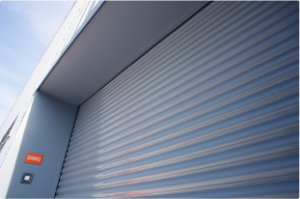
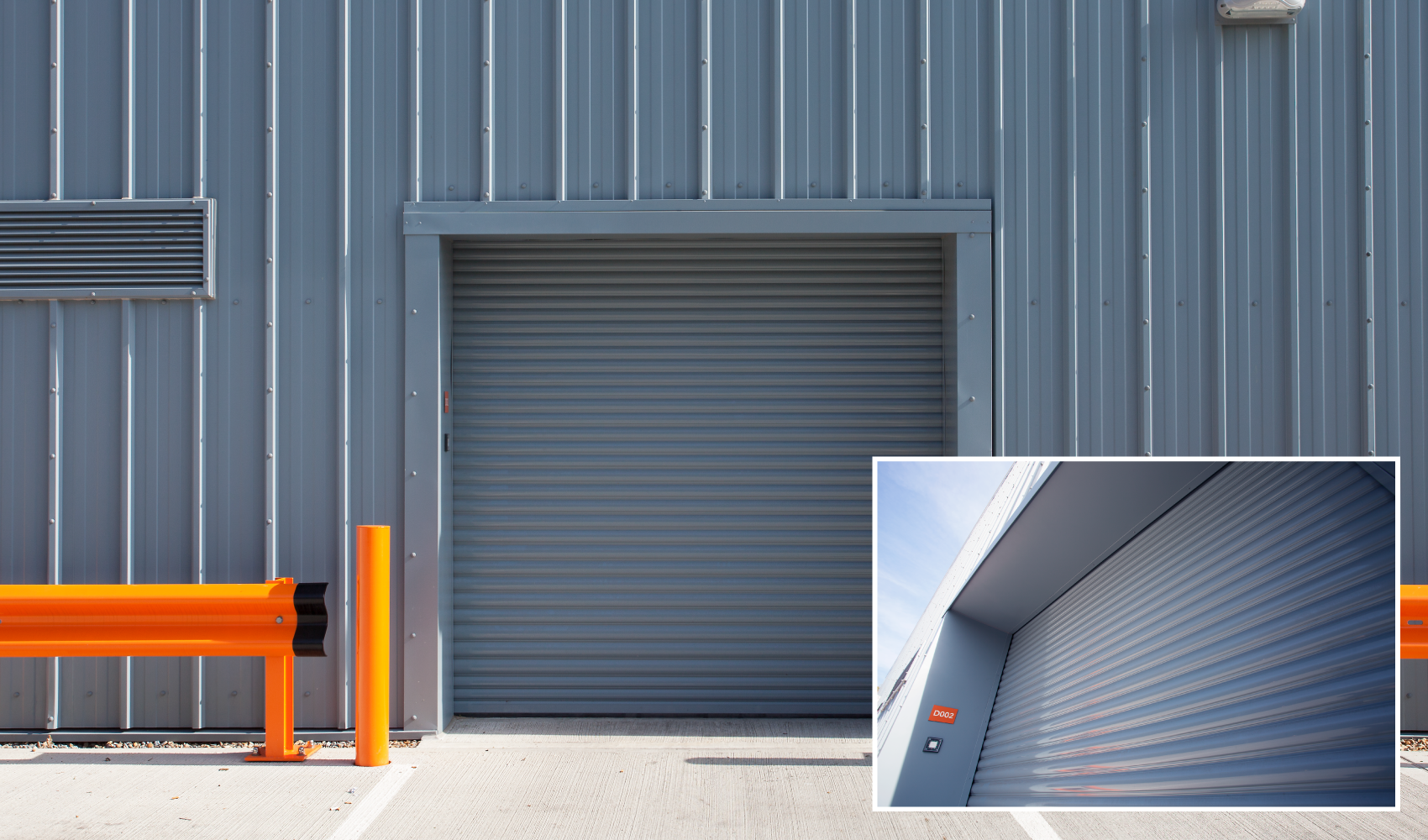
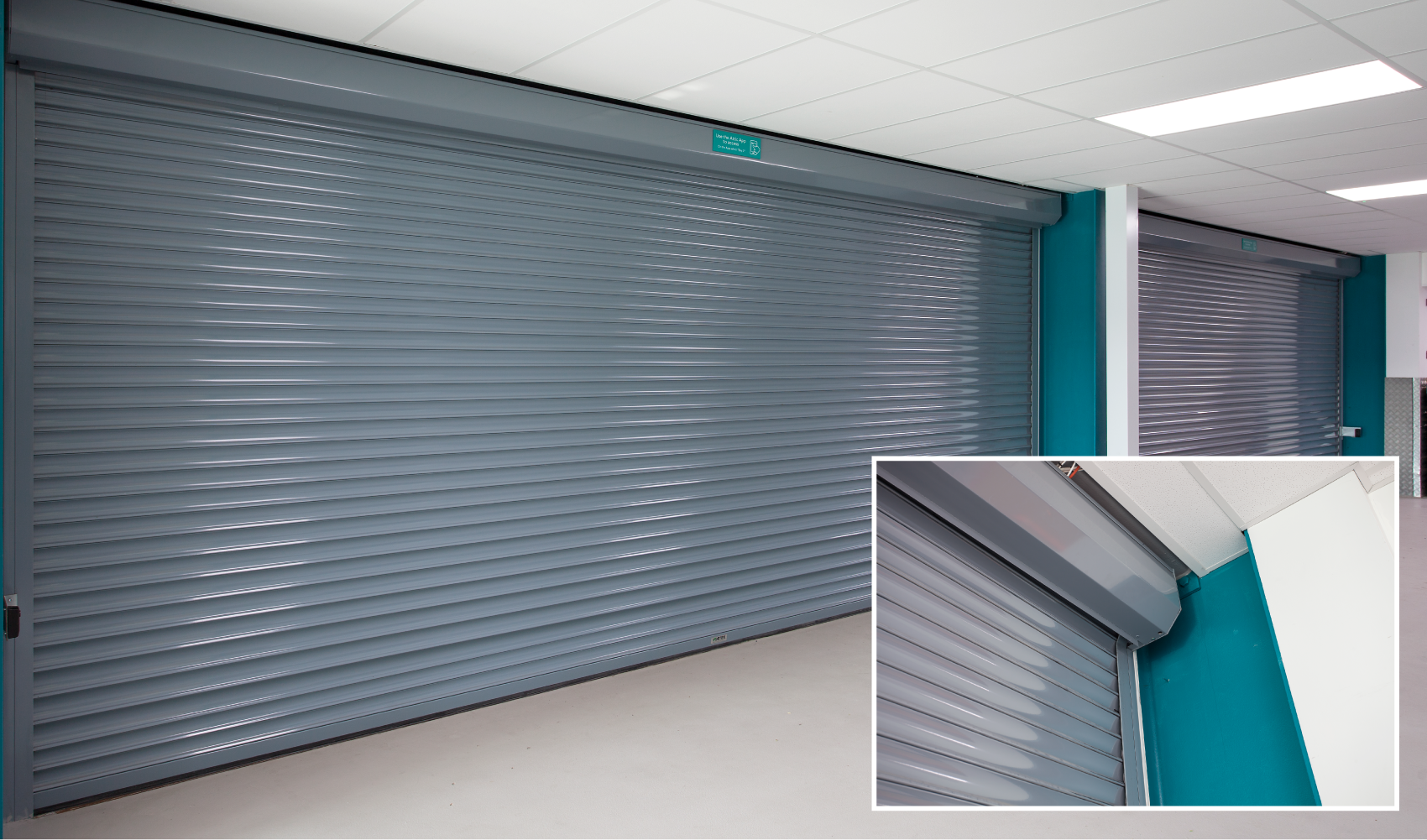
When installing security shutters, most people prefer to specify an internal face fix shutter. This means the “attack” side of the shutter has no external hood box or curtain profiles.
With no visible profiles and all main fixings hidden and inaccessible, the shutter is less vulnerable to tampering or forced entry.
Internal face fix — from outside
Internal face fix — from inside
When is an internal fix not possible?
Certain site situations may require a high-security-rated shutter, but internal fixings are not always an option. This may be due to:
- immovable pipework and services
- laboratories or controlled environments
- manufacturing processes involving chemicals or airborne substances that would be detrimental to the operation of the motor
In these situations, the motor and shutter may need to be installed externally.
The solution: external face fix
External face fix — from outside
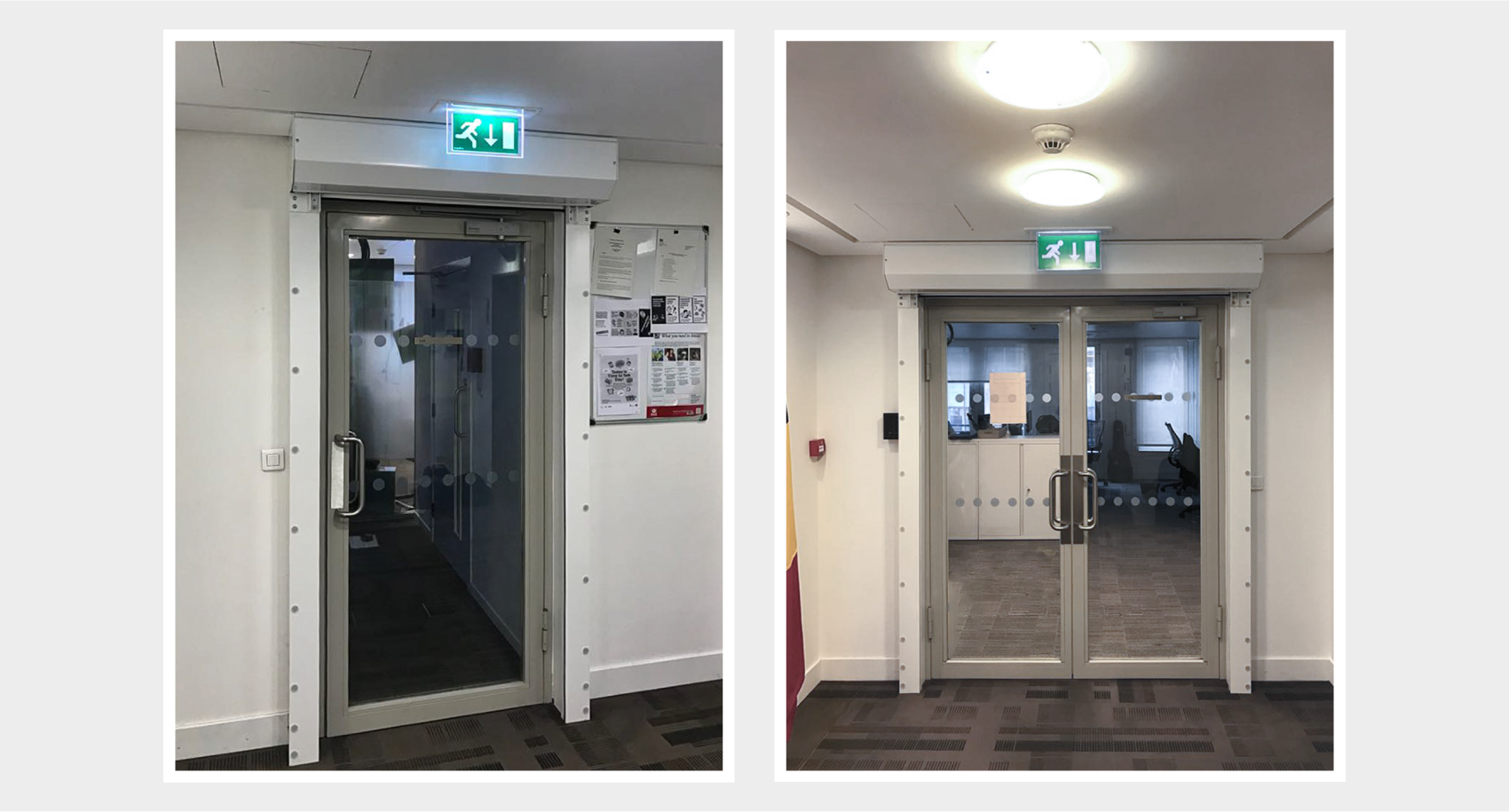
Although an externally fitted shutter would usually be more exposed to attack, Obexion external face fix shutters are as secure when fitted externally as they are when fitted internally.
This is achieved through cleverly concealed fixings, making it almost impossible to tamper with the profiles and fittings.
Internal face fix and external face fix compared
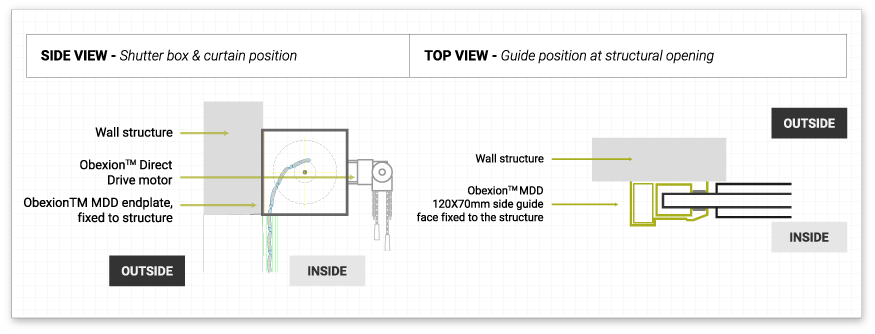
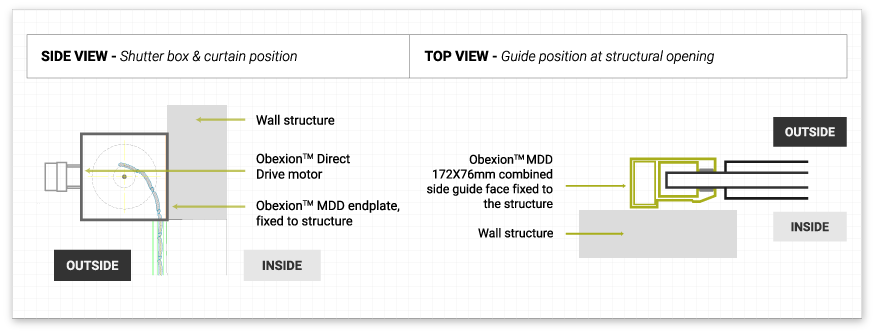
The two configurations position the shutter differently in relation to the structural opening while maintaining protection of the opening itself.
Obexion Internal Face Fix
Obexion External Face Fix
Independently tested and approved
The products listed below have been independently tested and approved by the Loss Prevention Certification Board (LPCB) up to LPS 1175 Issue 8, security rating E20 (SR5), for both internal and external face fix. This endorses the security of the product whichever version is installed.
Charter Global products available with both internal face fix and external face fix options include:
- Obexion UDB-03
- Obexion UDC-05
- Obexion MDD-05
- Obexion MDD-10
- Obexion MDD-15
- Obexion MDD-20
- Obexion MDE-05
- Obexion MDE-10
- Obexion MDE-15
- Obexion MDE-20
- Equilux Bolt-On
If you would like advice on choosing the right security shutter or installation configuration for your project, contact the Charter Global team to discuss your requirements